Husk: Flexible Life Buildings – Relocatable Construction

Sustainabilty with Husk

A Sustainable Way of Building

Features

Adapting Pre-Used Materials

The HUSK system is designed to give materials a second life. Components recovered from unrelated deconstructed buildings are adapted and re-used, extending their lifespan and reducing unnecessary waste.

From internal walls and flooring to cladding and roofing, HUSK is purposefully developed to accommodate reuse at multiple levels.

Modular cladding and roofing cassettes are designed to incorporate reclaimed insulation, finishes and structural elements. These can sit seamlessly alongside responsibly manufactured new panels — even within the same module — allowing each project to balance reuse with performance and availability.

Life Cycle Carbon Assessments

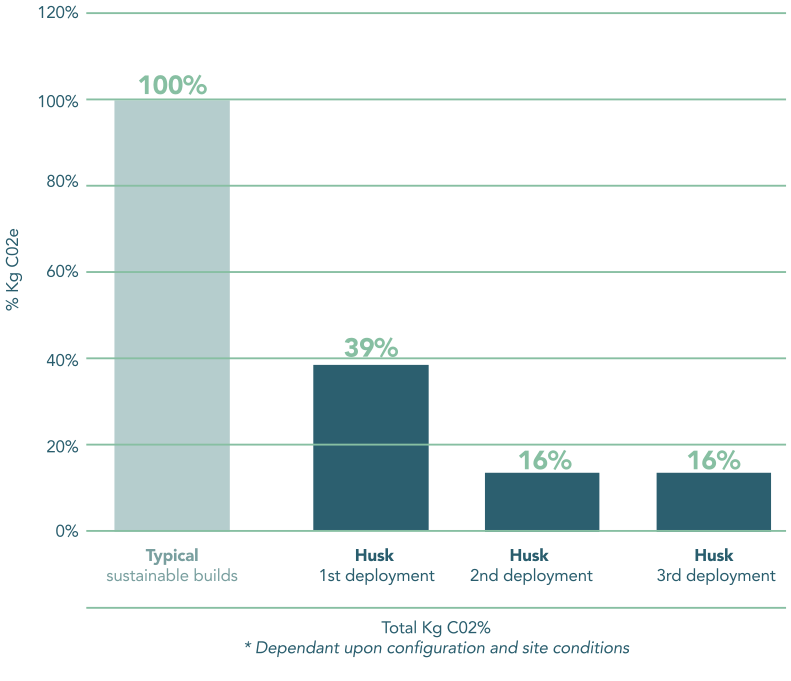
Environmental consultants JAW Sustainably undertook a Whole Life Cycle Carbon Assessment of the HUSK system comparing it with industry standard methods of modern construction for typical sustainable builds. The findings, showing a 62% improvement in GWP (Global Warming Potential) are significant, especially when compared to standard construction methods

According to Jaw Sustainably
“The 62% shown represents an extremely significant reduction over building practices utilised locally, one which is likely twice that which is expected with any ordinary new build project aiming to construct sustainably. This is due to the selection of low carbon materials at every juncture [and] where possible the conscious decision to utilise reused materials wherever a carbon intense material is required. Additionally, were both biogenic carbon storage and module D added to these totals the project would be carbon negative several times over”.

The report was commissioned to assess the first deployment of HUSK system, HUSKs ability to reuse well over 90% of materials the second and third deployments would be considerably less than the 62% GWP improvement.

Carbon reduction chart

Key findings of the report

62% Reduction in GWP: This far exceeds typical expectations for sustainable builds.

Use of Low Carbon Materials: A conscious choice of low-carbon and reused materials minimises environmental impact.

Biogenic Carbon Storage and Module D: Accounting for these factors would make the project carbon negative.

Husk: work with us

HUSK works with clients, architects and delivery teams to deliver flexible, resource-efficient buildings based on the principles of the Circular Economy.

With our partners at Claire Robertson Architects, alongside a network of specialist suppliers, contractors and engineers we collaborate — bringing together design quality and technical rigour.

HUSK is particularly well suited to urban infill, constrained sites and meanwhile use projects, where adaptability reuse and efficiency are critical.